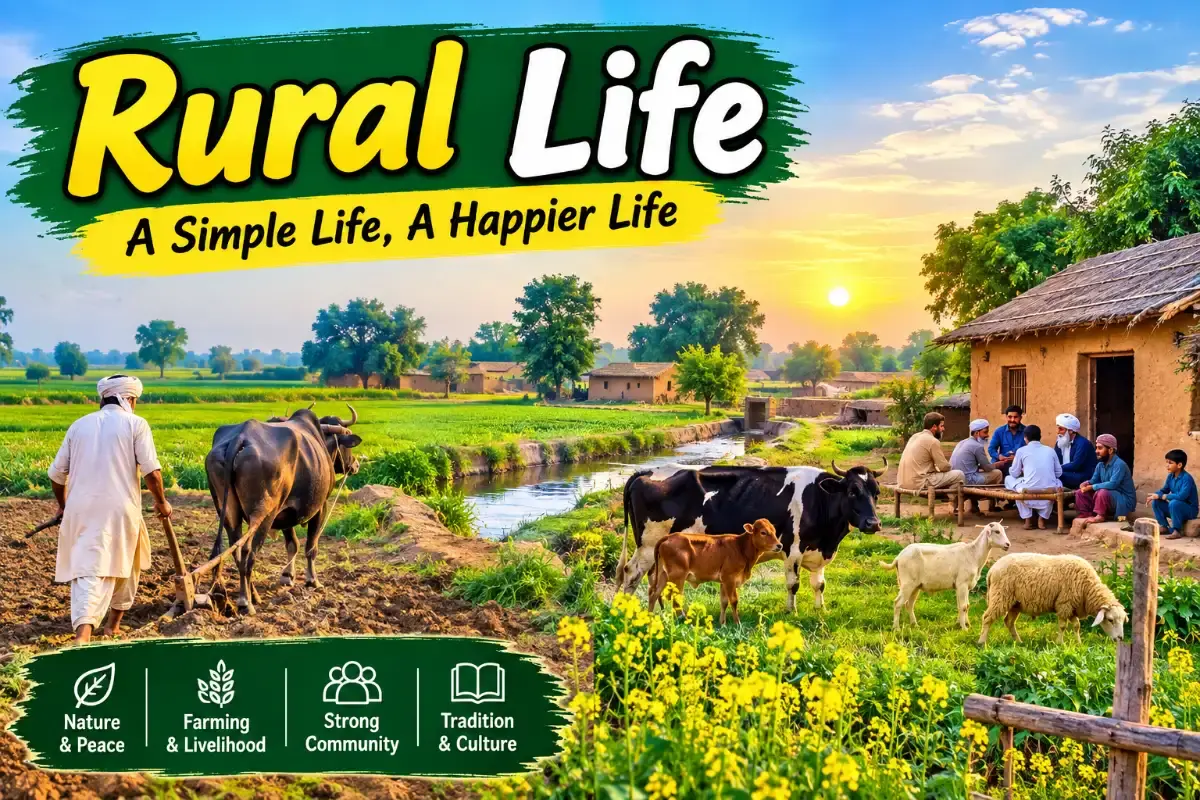
Rural Life
Rural life is a simple and peaceful way of living. People who live in villages are generally close to nature and depend on agriculture, livestock, and small businesses for their livelihood. Unlike city life, rural life is less crowded, less noisy, and usually more connected to traditional values and customs. Although villages may not have all the modern facilities available in cities, they offer a natural environment and a strong sense of community.
One of the most beautiful features of rural life is its natural environment. Villages are often surrounded by green fields, trees, rivers, canals, and mountains. The fresh air and open spaces provide a healthy atmosphere. In the early morning, people can hear the sounds of birds and see farmers going to their fields. The sunrise and sunset in rural areas are particularly beautiful. Nature plays an important role in the daily lives of village people.
Agriculture is the main source of income for many rural families. Farmers work hard in their fields to grow wheat, rice, cotton, sugarcane, vegetables, fruits, and other crops. They prepare the land, sow seeds, irrigate the crops, and harvest them when they are ready. Livestock farming is also common in villages. People keep cows, buffaloes, goats, sheep, and chickens. These animals provide milk, meat, eggs, and other useful products. Therefore, agriculture and livestock are important parts of the rural economy.
Rural life is also known for strong social relationships. Village people usually know one another and help each other in difficult times. Weddings, religious festivals, funerals, and other social events are often celebrated collectively. Neighbours share happiness and sadness with each other. This sense of cooperation creates unity and friendship among the people. Elderly people are generally respected, and traditional values are given great importance.
However, rural life also has some disadvantages. Many villages lack modern educational institutions, hospitals, transportation, and employment opportunities. Students may have to travel long distances to attend good schools and colleges. In some remote areas, medical facilities are limited, which can create serious problems during emergencies. Unemployment and poverty can also force young people to move to cities in search of better jobs.
Education is gradually changing rural communities. Schools and colleges are becoming more common, and technology has made information more accessible. Mobile phones and the internet allow rural people to communicate with others and learn new skills. Farmers can also use modern technology to obtain information about weather, crops, markets, and agricultural techniques. If rural areas receive better educational and technological facilities, their development can increase significantly.
Another important aspect of rural life is its traditional culture. Villages often preserve local languages, customs, clothing, food, music, and crafts. Traditional foods made from locally produced ingredients are an important part of village culture. Folk stories and traditional celebrations are passed from one generation to another. In this way, rural communities help preserve the cultural heritage of a country.
Rural people are generally hardworking and self-reliant. Farmers often begin their work early in the morning and continue until evening. Their lives depend heavily on weather conditions and natural resources. Despite difficulties, they work to provide food and raw materials for the entire country. In many ways, the progress of cities and industries depends on the hard work of rural communities.
In conclusion, rural life has both advantages and disadvantages. It provides peace, fresh air, natural beauty, strong relationships, and a simple lifestyle. At the same time, villages need better education, healthcare, transportation, employment, and modern facilities. Rural development is essential for the overall progress of a country. If governments and communities work together to improve rural areas, village people can enjoy better living standards while preserving their beautiful traditions and close relationship with nature. Rural life may be simple, but it remains an important and valuable part of society.
No comments yet. Be the first to comment!